
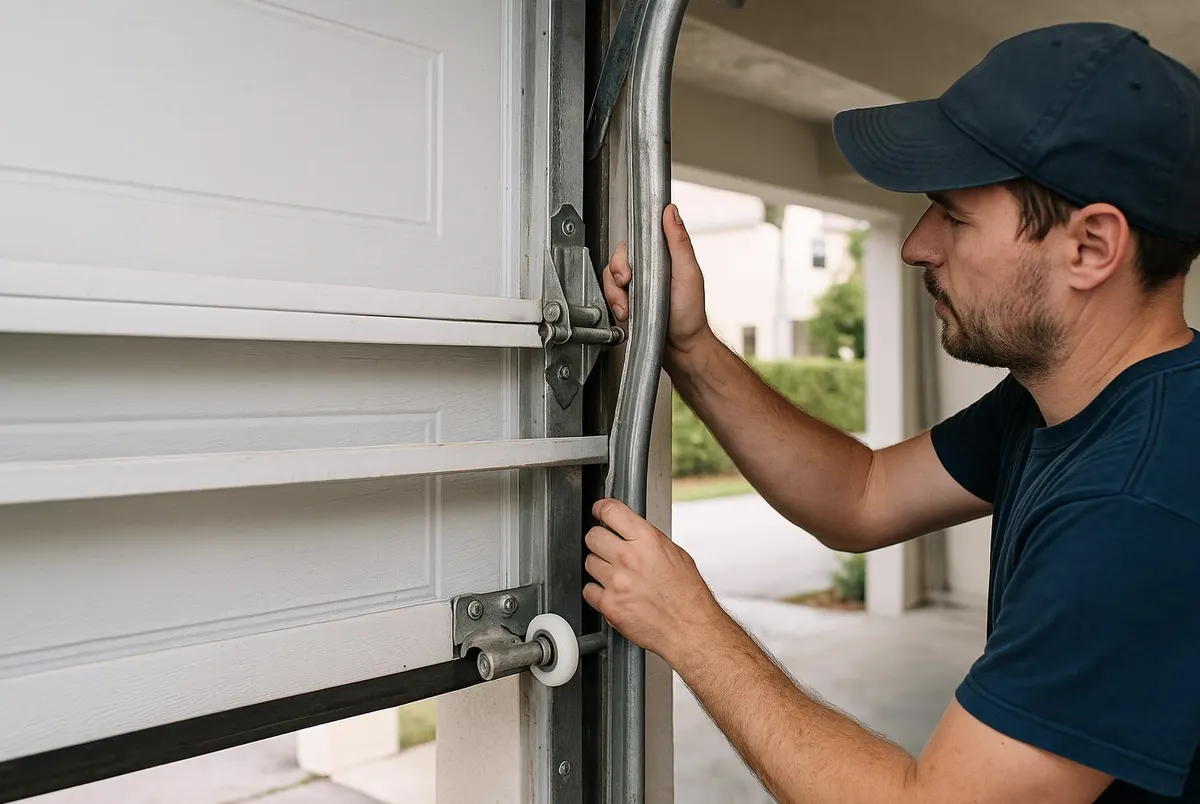
Short answer: they're cousins, not siblings
Yes, commercial and warehouse overhead doors are genuinely different from the door on your house — not just bigger. They're built with different materials, run on different operators, cycle far more often, and need a different maintenance rhythm. If one of you has been arguing that "a garage door is a garage door," that argument is settled. Now here's the proof you can forward along.
Size and weight aren't the only difference
A residential door panel is usually steel, wood composite, or aluminum, built to insulate a garage and look decent from the street. Commercial and warehouse doors are built first for durability and daily abuse. You'll see thicker gauge steel, reinforced tracks, and sometimes fire-rated or insulated commercial-grade panels depending on what's stored behind them. The springs and shafts are sized for doors that can weigh several times what a two-car residential door weighs, which changes how they're balanced and how dangerous a failure can be.
The operator is a different animal
Residential garage door openers are chain, belt, or screw-drive units designed for a handful of cycles a day — maybe less. Commercial overhead doors typically use heavier-duty jackshaft or trolley operators rated for high-cycle use, because a warehouse bay door might open and close dozens of times a shift. That cycle count matters: a motor built for a home garage will burn out fast if it's asked to do commercial-level work, and a lot of "my opener just died" calls at businesses trace back to a residential-grade unit installed where a commercial one belonged.
Safety features scale up too
Commercial doors more often include things like photo-eye sensors paired with edge sensors, manual disconnects accessible at working height, and sometimes separate pedestrian doors built into the panel. None of this is exotic — it's just proportional to the fact that more people and more forklifts are moving through that opening every day.
Maintenance: same idea, different intensity
The checklist is actually similar between residential and commercial doors — check hardware, lubricate moving parts, inspect cables and springs, test balance and auto-reverse — but the frequency is not. A homeowner can reasonably get away with a seasonal check. A business running a door through dozens of daily cycles needs that same inspection on a tighter schedule, because:
- Hinges, rollers, and cables wear out faster under high-cycle use and fail with less warning.
- Spring fatigue happens on a cycle count, not a calendar — more openings means the springs reach end-of-life sooner, regardless of age.
- A stuck commercial door often means a stalled loading dock or a closed storefront, so small problems need to get caught before they become shutdowns.
Where Layton's weather actually matters for both
This part applies whether it's a house or a warehouse: cold, dry winters and big day-to-night temperature swings stiffen grease, shrink metal slightly, and make springs and cables more brittle right when they're asked to lift the most weight on a frigid morning. Add the hail these doors take in summer and the intense high-altitude sun fading seals and finishes year-round, and you've got conditions that are hard on any overhead door — just harder, faster, on one that's cycling all day long. Going into the cold months, both residential and commercial doors benefit from fresh lubrication and a cable/roller check before the hard freezes settle in.
When to call Layton Garage Door
If you're a homeowner, this explainer is really just useful trivia — but if you're also running a shop, garage, or small warehouse bay in the area, it's worth knowing we handle both sides. For a business door that's cycling heavily and showing early wear — slow closing, grinding, an opener that strains — our Garage Door Maintenance service catches the small stuff before it strands a loaded dock. And if a spring or cable has already let go, our Garage Door Repair and Spring Replacement teams know the difference between a residential fix and a commercial-grade one, and bring the right parts the first time.
Whether it's a two-car garage or a loading bay, if something about your overhead door doesn't feel right, call Layton Garage Door — serving Layton, Kaysville, Clearfield, Syracuse, Farmington, Clinton, South Weber, and Fruit Heights. We'll show up, diagnose it straight, and tell you exactly what it needs.